
“He ate his breakfast with his back against the tree, reading the magazine while he ate. He had previously read but one story; he began now upon the second one, reading the magazine straight through as though it were a novel. Now and then he would look up from the page, chewing, into the sunshot leaves which arched the ditch… It seemed to him that he could see the yellow day opening peacefully on before him, like a corridor, an arras, into a still chiaroscuro without urgency. It seemed to him that as he sat there the yellow day contemplated him drowsily, like a prone and somnolent yellow cat. Then he read again. He turned the pages in steady progression, though now and then he would linger upon one page, one line, perhaps one word. He would not look up then. He would not move, apparently arrested and held immobile by a single word which had perhaps yet not impacted, his whole being suspended by the single trivial combination of letters in quiet and sunny space, so that hanging motionless and without physical weight he seemed to watch the slow flowing of time beneath him, thinking…”
– From “Light in August” by William Faulkner
For a while now I’ve been thinking about what it means to live in the present. I’m a very sentimental person and I often find myself ruminating upon memories and of things past. I still vividly remember those hazy summer days of sitting in the back of my mom’s old tan-colored Cadillac, the hum and drum of the motor, the early 2000s pop hits playing on the radio as she’d drive me to soccer practice. I remember the way the purple-leaf plum trees seemed to glow at dusk as my dad and I kicked the soccer ball around until nightfall. I remember the neighborhood kids riding their scooters over to our cul-de-sac every day after school. We’d play together until sunset, and I’d go to bed that night excited for the next day. Days felt much longer then, and moments more vivid. I often wonder what changed since becoming an adult.
Perhaps this is why books and films that touch upon the passage of time resonate with me so much. The film “Perfect Days” (2023) by Wim Wenders is one that has stayed with me ever since I saw it in theaters. It’s a very slow and meditative film that follows the life of an ordinary middle-aged man who works as a toilet cleaner. As IMDb puts it: “Hirayama cleans public toilets in Tokyo, lives his life in simplicity and daily tranquility. Some encounters also lead him to reflect on himself.”
The so-called “perfect days” of his are simple, and the movie opens with monotonous repetitions of the same daily routine: Wake up to the sound of street sweeping. Water plants. Wash face. Brush teeth. Trim facial hair. Get dressed. Open the door, look at the sky. Drink a vending machine coffee. Listen to cassette tapes of cherished music. Clean public toilets. On the way home, stop by the public bath. Eat dinner at the local restaurant. Go home. Read a book, fall asleep. This repetition of trivial moments takes place for what feels like the first half of the movie. Not a single word is spoken.
I know it sounds boring, but I could go on and on about why I love the opening of this film. For one, I love the way it elevates the trivial motions that we go through every day. We all get ready in the morning–brushing our teeth, washing our face, getting dressed–usually without a second thought. Watching Hirayama’s routine felt like an invitation to notice the little things I often miss: the minute squeak my faucet makes when I turn the lever all the way back. Or the gritty, sandpapery sound my razor makes with each stroke, the sensation of the blades gliding across the shaving cream on my skin. The ordinary become art.
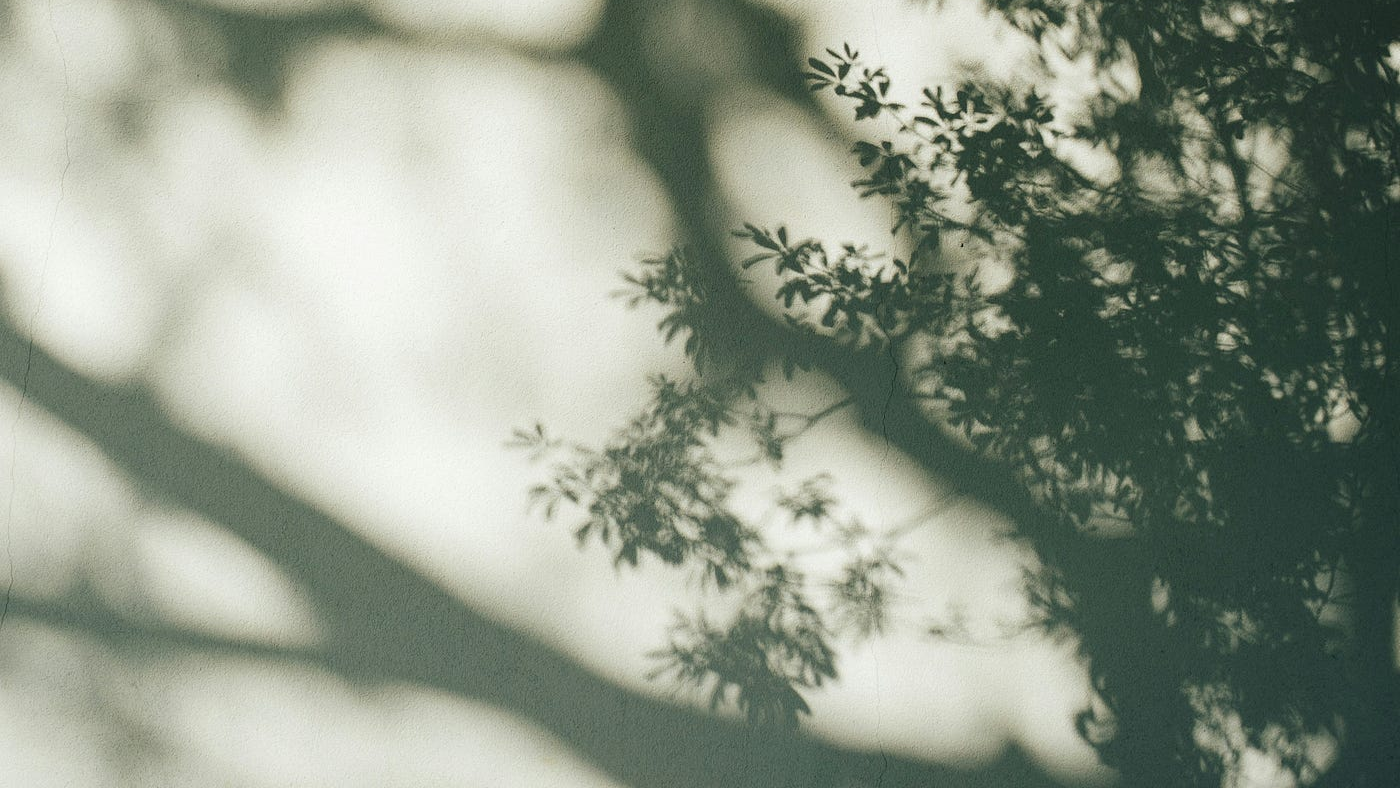
A recurring theme in the movie is komorebi–a Japanese word that refers to the sunlight that filters through the leaves of trees. I’ve always loved this word, and I think it encapsulates Hirayama’s character perfectly. Throughout the film we often see Hirayama gazing at the shadows of the leaves of trees swaying in the wind. He does this whether he’s eating a meal at the shrine or in-between cleaning toilets. It never fails to bring a smile to his face. While the phenomenon lasts only a brief moment, Hirayama is someone who notices.
There’s a pivotal scene in the movie that, to me, sums up the message. Hirayama and his niece, Niko, are riding their bikes home and crossing a bridge spanning the Sumida River. When they reach the middle, they stop to watch the sunset. Niko, now gazing at the horizon where the river leads, says to Hirayama that they should go to see the ocean someday. He smiles and says, “Next time”.
“When is next time?”
“Next time is next time. Now is now!”
This brief exchange between two generations perfectly captures the constant tension I’ve been experiencing since becoming an adult. The tension between fantasy and reality, between worrying about the future and enjoying the present, between ambition and contentment.
Hirayama and his niece admire the same sunset but see it differently. One looks beyond the river, dreaming perhaps of the vast ocean. The other is content with the river before him, appreciating it entirely.
A part of me feels like the niece, driven by an insatiable desire for more; a byproduct of the materialistic society that I was raised in. I want so many things in life–a respectable career, a family, an aesthetic and vibey home.
Yet I also see a quieter, shame-ridden part of myself in Hirayama. Deep down, I understand that most of what I’m doing is performative. If I didn’t have the desire to make my parents proud, or to have a career that my future spouse doesn’t have to be embarrassed about when she’s telling her friends what I do for a living, would I still be making the same sacrifices now in hopes of future happiness? Am I just trying to please others? What do I truly want in life?
It’s easy to equate Hirayama’s way of life with laziness. In our society, ambition is put on a pedestal. If you aren’t chasing your career or working toward that next big goal, you’re quickly dismissed as a bum. He spends his days seemingly floating about without a grand destination or goal in sight. But to me, he’s the coolest character I’ve ever seen. He cherishes the little things in life and lives unburdened by judgment, working with pride and diligence as a toilet cleaner.
This current chapter of my life feels much like the river in the film. I’m anxious about “making it” in life, often fixated on the destination ahead. Yet surely these ordinary days will also pass, and a time will come when I look back at this chapter fondly, just as I now reminisce about my childhood. I don’t want to let the present slip by. I’m learning to notice what I once overlooked–my monotonous commute, small interactions with my parents and coworkers–and to cherish these ordinary, perfect days.

 marginalia