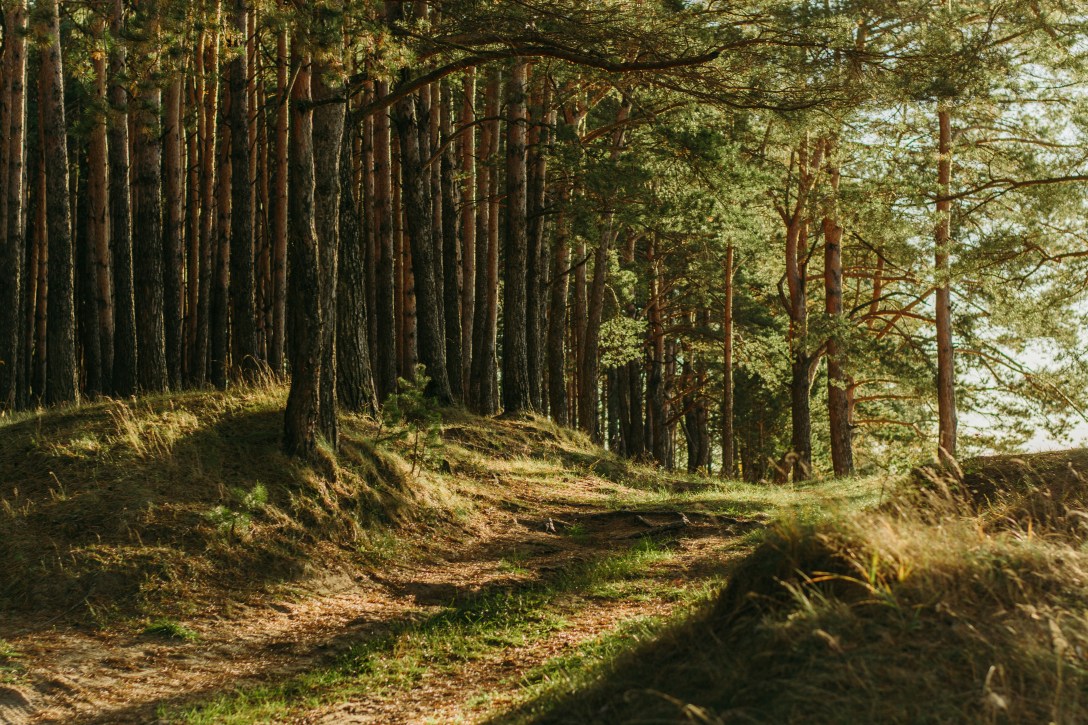
In the forest, every least thing’s important.
It’s all threaded together, so you can’t tell where one thing ends and another begins if you really look at it.
The little insects you can’t even see, they play a role as vital as the river.
The dead tree is as important as the living one.
There must be something for us to learn from that.
– Claire Thompson from “Train Dreams” (2025)
I’ll preface by admitting that this is embarrassing for me to confess. I fear that it presents me in a negative light but I’ll proceed anyway.
For years now, I’ve often fantasized about being reborn in some bygone era. Say, a country bumpkin in a medieval countryside, a time long before LinkedIn. I’d reside in a mountain cottage set before a perfect, Ghibli-esque landscape. I wouldn’t worry about what to wear or whether I’d succeed in life. No phone, no internet. Free at last from the incessant bombardment of advertisements, those mosquito-like reminders that no matter how content I am right now, things could be better. No more appointments, no more meetings, no more relational burdens. In days bound only by the sun and moon, I’d wake up to the sound of birds and drift asleep as night falls. I’d read books, write letters, and go on long walks to pass the time. I’d eat a humble loaf of bread each day and know exactly what’s expected of me each morning: to tend to the field until I slowly wither away.
Obviously, this is logistically impossible and highly idealized. Life objectively sucked back then. I’d surely begin to detest that humble loaf of bread by day 6 and die by 30 from malnutrition.
Yet despite these admissions, such fantasies continue to sprout time and time again. They become particularly strong whenever I re-watch a Ghibli film or watch a period piece. Last night I watched Train Dreams, a film about an ordinary logger in early America. He drifts along in life until he falls in love. They build a cottage, a family, and a life together. I won’t spoil anything but the film is visually beautiful and moving. The scenes of his family life in the cottage, as well as the philosophical questions which weave their way through the entire film, brought me back into that familiar headspace.
That leaves me stuck on one question. If I know these dreams and fantasies to be highly idealized and delusional, what is it that I truly long for?
To attempt to explain the way I feel, it’s as if the things we value today feel extremely empty to me. I know they won’t fill me even if obtained.
For example, I long for a successful career. I was told to care about this long before I could even grasp it. I continuously fall into the trap of thinking that lasting happiness will finally arrive once this is achieved. I’d be free from the heavy burdens of familial and personal expectations. I wouldn’t be scared of meeting new people because of what I do for a living (or lack thereof). Instead, I’d stand proud because of how my career — a key component of my value as a human being — is perceived by others. But for as long as I can remember, these things I so long for, once obtained, have never filled me. Not once.
And so it’s probably not the distant, simpler past that I seek when these fantasies return to me, but rather, a way of seeing the world that the present rarely allows. The logger in the forest, the cottage beside the clearing, the quiet rhythm of slower days: images of a life that feels whole and realized. A life in which each action follows naturally from the last, as in the forest, where all things are threaded together.
And so when I return again to the present, I feel as though my existence needs to be justified by some visible ambition, by motion, by the accumulation of achievements. In this light, the image of me reading a book in the afternoon or writing my thoughts while enjoying a cup of coffee feels invalid — like time wasted rather than a life being lived.
This feeling will probably stay with me so long as the world proceeds the way it has been. It is nothing more than the wish that my life might one day appear whole in the same way; that when I gaze upon it, the seemingly disconnected pieces might reveal themselves as threaded together all along, as all things do within the forest.

 marginalia