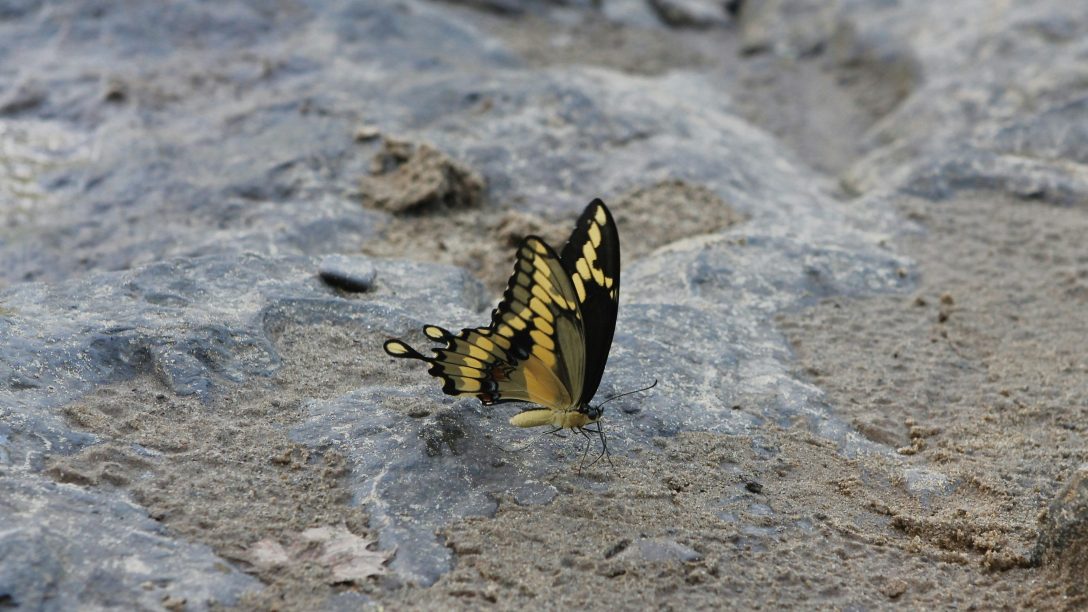
Lately, I’ve been thinking a lot about caterpillars and butterflies. Specifically the phenomenon of metamorphosis. It kind of struck me just how crazy it is. That a mere caterpillar, without guidance, knows to form a cocoon and transform. Who could have imagined that these small, helpless creatures would one day bear beautiful, ornate wings and take to the skies?
I first learned about metamorphosis in elementary school by raising butterflies. Back then, all of that stuff just made sense to me. It all felt so natural. Like, of course the world is full of little miracles. Why wouldn’t it be? I’d learn amazing new things and leave it at that. I navigated the world with unquestioning, beady eyes.
What changed since becoming an adult?
Did you know that swallowtail butterflies can inherit memories? Not just memories from when they were caterpillars, but memories from their parents and grandparents; memories they never experienced firsthand. Isn’t that fascinating?
I learned this from a video about a young boy in Japan. While raising various butterflies at home, he noticed that some of them would fly back to him once released; as if they recognized him from their early days as a caterpillar.
In his experiment, butterflies learned to avoid a scent associated with a negative stimulus, and that aversion persisted in their offspring, even when those offspring had never encountered it themselves.
My adult, knowledge-hungry brain rushed for possible explanations: This probably occurs by some DNA alteration in the parent generation’s genome, which is then passed down to their offspring.
But what of the quality of memory that they inherit?
The concept of “memory” here functions as the mere ability to store and remember information. In other words: the boring, objective meaning of the word. Nothing more, nothing less. Not the kind of memory that I prefer; those imbued with emotion and layered with meaning.
At the end of the video, the boy who conducted the experiment appeared slightly emotional as he talked about how his findings deepened his love for these little creatures. Watching him, I felt as though he was making that naive mistake of attributing supernatural qualities to ordinary things. A beautiful but foolish thing to do. Insects don’t have emotions. There’s nothing deeper to it. Just wait until you become an adult. You’ll understand as you learn how the real world works.
But as I grow older, I’m starting to question that instinct. This trade of wonder for knowledge. While it’s one that I’ve grown accustomed to, I’m realizing how important it is to maintain and protect a sense of childlike wonder about the world. To be delusional, if you will. To choose to say no to reason, to logic, in favor of narrative.
As someone once said, it’s not always a good thing to know. I still long for the days when I wondered what the stars were made of, or how the waves form, or why the rain falls. As much as I longed to find out someday, I want to go back and tell myself that wondering is enough.
About a year ago, I watched a Soft White Underbelly interview about a man grieving the loss of his 21-year-old son. His son, a musician and poet, had committed suicide. It’s a deeply emotional interview that I haven’t been able to revisit. I remember why it stuck with me, though. As he retold the events following his son’s death, the father would often interweave beautiful memories which he refused to interpret as mere coincidence. Like how rain would pour down with him whenever he broke down in tears. Or how the incessant Vancouver rain would stop briefly, just as he left the house to walk the dog, only to pour down again the moment he re-entered his home.
I remember thinking the same things then as I do now. How one appears so foolish when attributing meaning to mere coincidence.
But I want to start seeing things differently. I’m reminded that the world we live in can be as mysterious and endlessly fascinating as we allow it to be. Although we’ve made a lot of progress in this department of knowing, there remains countless phenomena that resist explanation. I think there’s a lot of power in choosing meaning over emptiness, even if it isn’t strictly true.
And so I choose to believe that, when the boy’s butterflies returned to him, they did so not by mere coincidence, but in remembrance of the love and care that the boy gave them while they were little. And that the sky, in grieving along with the father, let the rain pour down at just the right times (I’ll admit, a little heretical of me, but you get the point).
The world is filled with new surfaces to scratch. Whenever I encounter one, that dormant, childlike sense of wonder returns. I’m learning to look out for these invitations more often. And in receiving them, I’m finding that I fall in love with the world all over again.

 marginalia